

Lyxel and Flamingo alternatives for D2C and luxury ecommerce marketing in India | Last updated: October 2026 | By the Adyogi Editorial Team | Tools tested: 10
D2C and luxury ecommerce brands scaling across Meta, Google, Amazon, and marketplaces need platforms built for catalog automation, omnichannel bidding, and measurable ROAS. This guide compares the best Lyxel and Flamingo alternatives for D2C and luxury ecommerce marketing in India and globally.
| Rank | Tool | Best For | Starting Price | Rating |
|---|---|---|---|---|
| 1 | Adyogi | D2C, marketplace, and omnichannel ad automation | Custom, from ~$450/mo on sub-$3K spend | 9.3/10 |
| 2 | Madgicx | AI-driven Meta ad optimization for DTC brands | $99/mo (spend-tiered) | 8.5/10 |
| 3 | Smartly.io | Enterprise cross-channel creative automation | ~$4,000-$5,000/mo minimum | 8.7/10 |
| 4 | Skai (formerly Kenshoo) | Enterprise commerce-media and retail media management | $114,000/year | 8.4/10 |
| 5 | Triple Whale | Shopify-native attribution and analytics | Free; paid from $129-$219/mo | 8.2/10 |
| 6 | Northbeam | Multi-touch attribution and media mix modeling | $1,500/mo | 8.0/10 |
| 7 | Hunch | Dynamic product ad creative automation | ~€2,500/mo | 8.1/10 |
| 8 | AdCreative.ai | AI-generated ad creatives and copy | $39/mo | 7.6/10 |
| 9 | Feedonomics | Full-service product feed management at scale | Custom quote | 8.0/10 |
| 10 | Criteo | Commerce media, retargeting, and retail media network access | CPC/CPM, % of media spend | 8.3/10 |
Our #1 pick is Adyogi, combining catalog-first automation, dedicated account managers, and genuine omnichannel coverage across Meta, Google, Amazon, Flipkart, and Myntra.
Why You Need Lyxel and Flamingo Alternatives in 2026
D2C and luxury ecommerce brands increasingly need platform-level automation rather than purely agency-driven campaign management. Ad spend fragments across Meta, Google, Amazon, and marketplaces, and manual management cannot keep pace with SKU-level bidding and daily budget reallocation decisions. Modern platforms solve this through catalog automation, AI-driven bid optimization, and unified reporting. The right platform reduces wasted spend on underperforming SKUs, surfaces clear ROAS data, and scales without requiring large in-house media teams. For supporting market data, see LyXel: tu Android en la PC con teclado y mouse.
How We Evaluated These Platforms
| Criteria | Weight | What We Looked At |
|---|---|---|
| Omnichannel coverage | 25% | Meta, Google, Amazon, and marketplace integrations |
| Catalog and creative automation | 20% | SKU-level segmentation, dynamic creative, feed management |
| Pricing transparency | 15% | Published tiers vs. custom quotes, minimum spend thresholds |
| Ease of use and onboarding | 15% | Learning curve, setup time, dedicated support |
| Reporting and analytics depth | 15% | Attribution accuracy, dashboard clarity, real-time data |
| Reviews and reputation | 10% | G2, Capterra, and verified customer feedback |
For industry-standard evaluation frameworks, see Is Your Ecommerce Brand Actually ....
1. Adyogi: Best for D2C and Marketplace Ad Automation
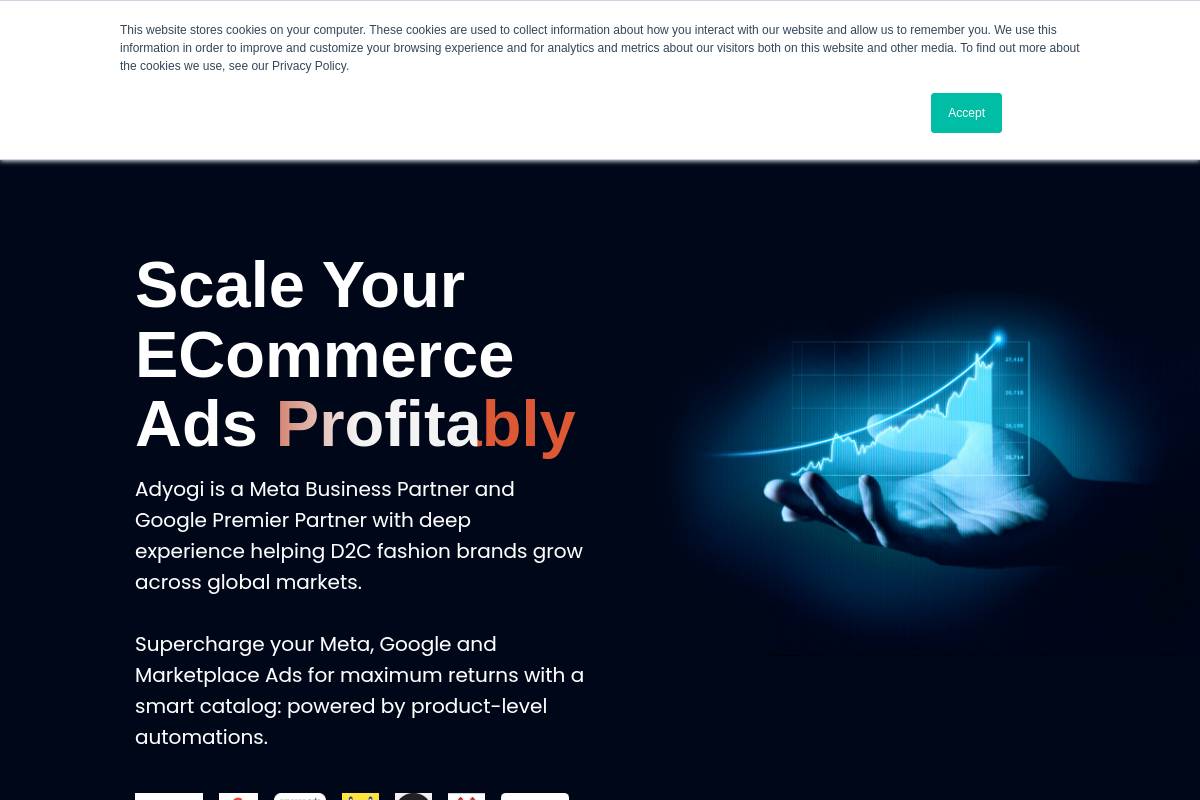
Adyogi is an AI-driven ad management platform designed for ecommerce brands, offering catalog optimization, automated workflows, and dedicated account management across Meta, Google, and marketplace channels.
Key Features
- SKU-level segmentation: Automatically classifies SKUs into Hero Products, High Potential, Zombie Products, and Non-Performers, building targeted ad groups around each segment.
- Stop-loss automation: Underperforming ads get automatically paused to cut wasted spend.
- Omnichannel reach: Coverage spans Facebook, Instagram, Google, Amazon, Flipkart, and Myntra from a unified dashboard.
- Dedicated account managers: Hands-on support pairs automation with human expertise.
- Published pricing: Entry plan starts from ~$450/mo on sub-$3K spend; managed plans require minimum $6,000 per channel.
Best For
Ideal for established D2C and luxury ecommerce brands spending $3,000+ monthly who want catalog automation with dedicated oversight, particularly marketplace sellers managing Amazon, Flipkart, and Myntra alongside Meta and Google.
Pros and Cons
- Pro: Genuine omnichannel automation built around the product catalog.
- Pro: Dedicated account managers reduce learning curve for teams without large in-house media staff.
- Pro: 4.6/5 rating on G2 based on verified reviews.
- Con: Pricing above entry tiers requires sales conversation.
- Con: Primary strength in India and fashion/D2C verticals.
Rating: 9.3/10
2. Madgicx: Best for AI-Driven Meta Ad Optimization
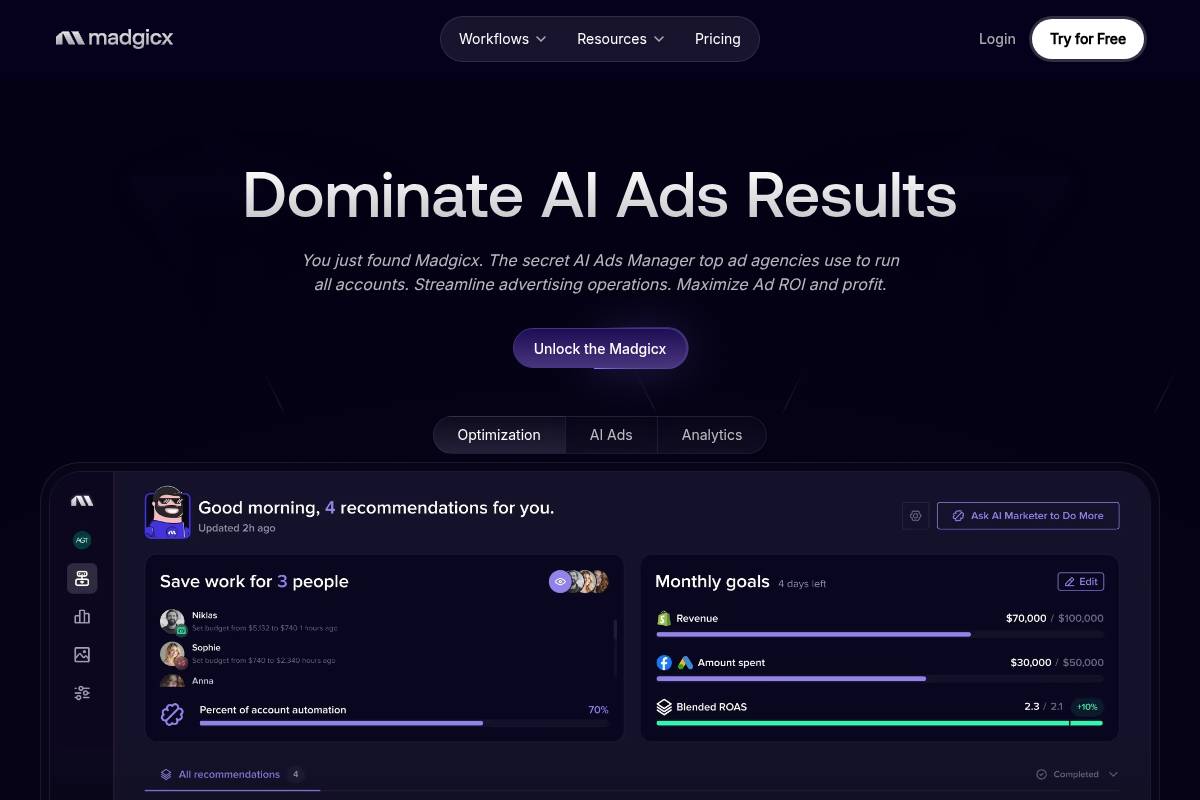
Madgicx is an AI advertising platform combining business intelligence, predictive optimization, and creative tools for ecommerce brands running Meta campaigns.
Key Features
- AI audience and targeting: Predictive algorithms build and refine audiences based on account performance data.
- Creative scoring: AI-assisted tools identify high-performing ad variations.
- Spend-tiered pricing: Plans start at $99/month and scale to $329/month at $20,000-$30,000 monthly spend, with annual discounts available.
- Tracking Pro add-on: Server-side tracking available at $49/month per account.
Best For
Meta-focused DTC brands spending $5,000+ monthly who want AI-driven budget reallocation. Less suited for brands needing Google Shopping or marketplace coverage.
Pros and Cons
- Pro: Strong AI automation for Meta-specific bidding and creative.
- Pro: Transparent spend-tier pricing.
- Con: Steep initial learning curve; core automation requires higher-tier plans.
- Con: Limited reach beyond Meta.
Rating: 8.5/10
3. Smartly.io: Best for Enterprise Cross-Channel Creative Automation
Smartly.io is an enterprise advertising platform automating creative production, media buying, and optimization across Meta, TikTok, Pinterest, Snapchat, and Connected TV.
Key Features
- Feed-based creative automation: Generates thousands of ad variants using product feed data with video overlays and dynamic templates.
- Cross-platform management: Unified control across Meta, TikTok, Pinterest, Snapchat, and other platforms.
- Enterprise pricing: Minimums range from $4,000-$5,000 per month, structured as percentage of managed spend with annual contracts.
- AI budget allocation: Automatically allocates budgets across campaigns and channels.
Best For
Large enterprise brands and agencies managing over $250,000 in annual ad spend across multiple social channels requiring extensive creative versioning.
Pros and Cons
- Pro: Powerful creative automation and cross-channel orchestration suitable for complex, high-volume campaigns.
- Pro: Responsive and proactive customer support.
- Con: No published pricing or self-serve trial; lengthy sales cycle.
- Con: Complex UI for smaller teams without dedicated technical staff.
Rating: 8.7/10
4. Skai (formerly Kenshoo): Best for Enterprise Retail Media Management
Skai is an enterprise commerce-media platform unifying retail media, paid search, and paid social across 300+ publishers including Amazon, Walmart, and Instacart.
Key Features
- Published tiers: Standard tier at $114,000/year covers up to $4M annual ad spend; tiers extend through Advanced and Enterprise Premier at $756,000/year.
- Retail media network access: Direct integration with Amazon, Walmart, Instacart, Google, and Microsoft.
- Celeste AI agent: Machine learning optimization tool included in every tier.
- Enterprise support: Dedicated customer success management and custom integrations.
Best For
Large enterprise advertisers with multi-million dollar budgets across retail media, paid search, and paid social. Not cost-effective for brands spending below $1-2 million annually.
Pros and Cons
- Pro: Rare transparency in pricing for enterprise-tier platforms with publicly available annual rates.
- Pro: Deep retail media network coverage ideal for marketplace-heavy luxury and D2C brands.
- Con: Entry-level tier significant for brands under $4M annual spend.
- Con: Lengthy sales process and onboarding spanning weeks.
Rating: 8.4/10
5. Triple Whale: Best for Shopify-Native Attribution
Triple Whale is a Shopify-centric analytics and attribution platform combining first and last-click attribution, real-time cross-channel analytics, and Moby AI for workflow automation.
Key Features
- Free plan: Includes first/last-click attribution, real-time analytics, basic post-purchase survey, up to 10 users, and 12-month data lookback.
- Paid tiers: Foundation ($219/mo) and Automate ($749/mo) offer advanced automation, monitoring, and measurement workflows.
- Moby AI: Natural-language queries for dashboards, cohort analysis, and reporting.
- Compass add-on: Multi-touch attribution combined with media mix modeling and incrementality testing.
Best For
Shopify-first DTC and luxury ecommerce brands spending $5,000+ monthly on ads seeking fast, native dashboard without heavy implementation.
Pros and Cons
- Pro: Fast time-to-value through native Shopify app and generous free tier.
- Pro: Strong creative and cohort analytics.
- Con: Pricing scales with GMV; mid-contract price increases reported.
- Con: Not optimal for brands selling significantly outside Shopify.
Rating: 8.2/10
6. Northbeam: Best for Multi-Touch Attribution and MMM
Northbeam is a marketing intelligence platform specializing in multi-touch attribution and media mix modeling using machine learning and deterministic matching.
Key Features
- Multi-touch attribution: Machine learning weights touchpoints based on conversion influence across clicks and deterministic views.
- Starter tier: $999/month for businesses spending under $250k/month with Shopify integration.
- Deterministic matching: Connects ad views from Meta, TikTok, and others to revenue without probabilistic guessing.
- Apex scenario planning: Provides budget allocation recommendations.
Best For
DTC and luxury brands spending $50,000+ monthly across three or more channels requiring independent attribution beyond platform-reported data. Brands under $20,000/month will find costs difficult to justify.
Pros and Cons
- Pro: Sophisticated MMM and deterministic attribution suited for privacy-constrained measurement.
- Pro: Direct Shopify integration and unlimited user accounts on Starter tier.
- Con: Attribution methodology lacks full transparency.
- Con: Pricing scales with pageviews and spend, disadvantaging high-traffic, lower-conversion brands.
Rating: 8.0/10
7. Hunch: Best for Dynamic Product Ad Creative Automation
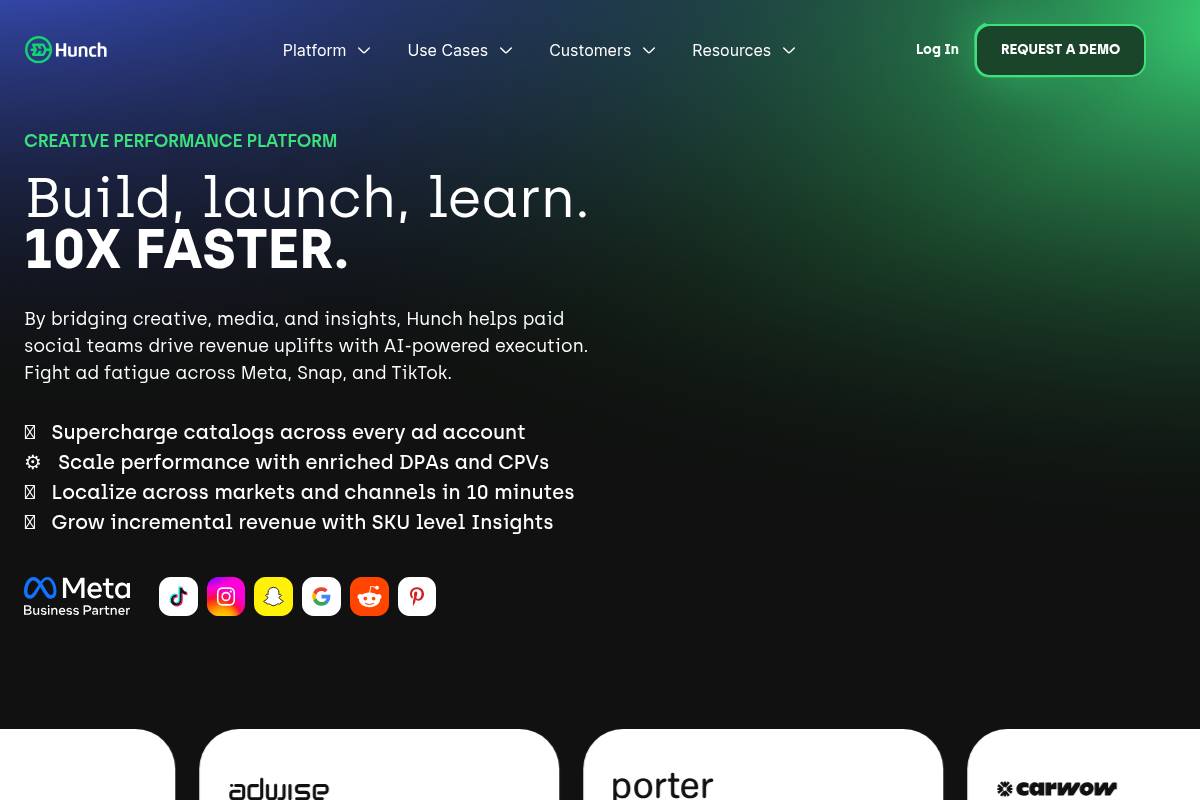
Hunch is a dynamic creative management platform leveraging AI to transform product feeds into personalized image and video ad variations for Meta, Snapchat, and TikTok.
Key Features
- Catalog-fed DCO: Creates closed loop between live catalog and ad content, eliminating outdated pricing or sold-out product ads.
- Multi-channel launch: Native integration with Meta and TikTok Dynamic Ads.
- Creative analytics: Performance data at template and variant level.
- Entry pricing: Around €2,000/month based on usage-based model.
Best For
Large-catalog ecommerce and luxury retail brands running complex, multinational dynamic product ad campaigns, especially when creative needs to update automatically with price or stock changes.
Pros and Cons
- Pro: Deep catalog-to-creative automation ensuring ads sync with live inventory and pricing.
- Pro: Advanced personalization including hyper-localized and weather-triggered messaging.
- Con: Enterprise-tier entry pricing challenging for brands using only fraction of features.
- Con: Sales-led evaluation process; direct testing not immediately available.
Rating: 8.1/10
8. AdCreative.ai: Best for AI-Generated Ad Creatives
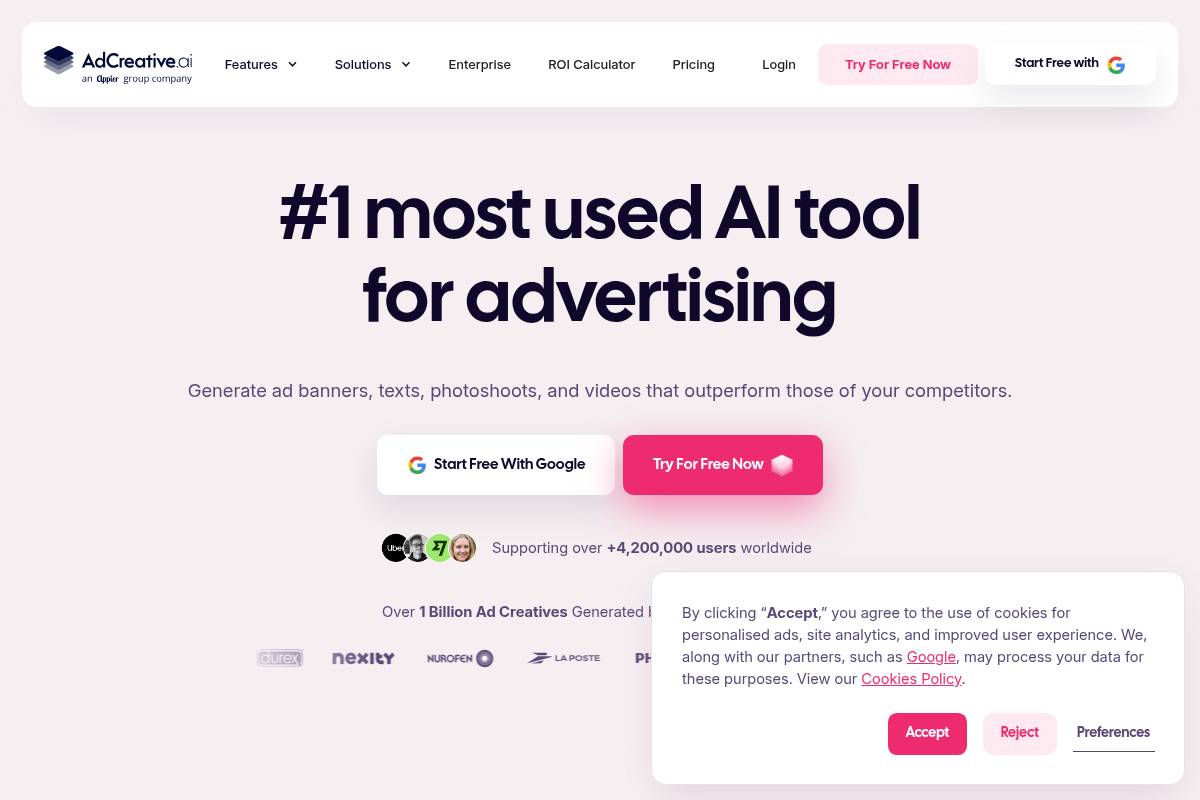
AdCreative.ai is an AI ad creative generation platform producing static images, ad copy, and video content for ecommerce advertisers.
Key Features
- Credit-based generation: Starter plan ($39/month) includes 10 credits, 1 brand, unlimited static generations.
- Video at Professional tier: Includes 50 monthly credits, 10 brands, 10 users, custom templates, product videos, batch generation, and compliance checker.
- Stock photo library: Access to 15+ million royalty-free images.
- Ultimate agency tier: 100 monthly credits, 25 brands, 20 user seats.
Best For
Small-to-mid-size D2C brands and solo marketers requiring fast, affordable static ad creative without extensive design resources. Less ideal for video-first creative.
Pros and Cons
- Pro: Low entry price with unlimited static generations.
- Pro: Broad feature set including compliance checking and creative scoring.
- Con: Video features only available at 6x price increase to Professional tier.
- Con: Creative generation tool only, not ad management or bidding platform.
Rating: 7.6/10
9. Feedonomics: Best for Full-Service Product Feed Management
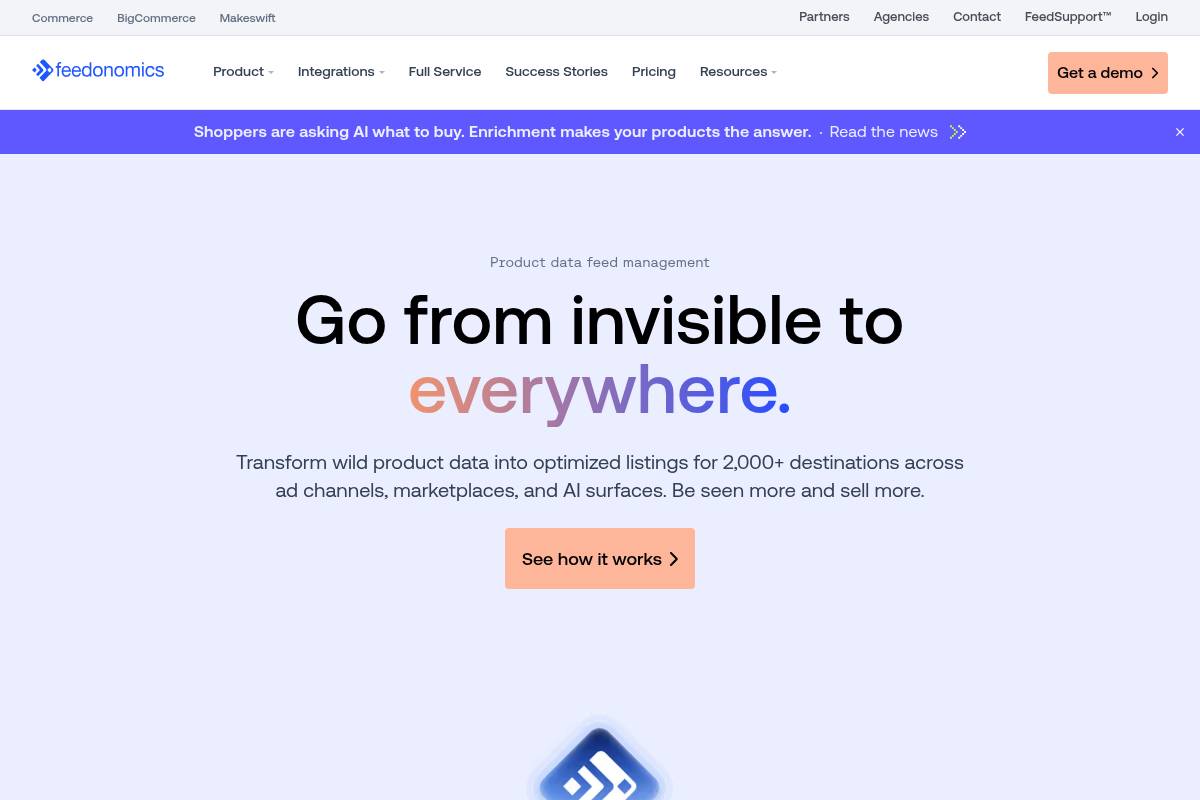
Feedonomics is a cloud-based product feed management platform optimizing and distributing product data across hundreds of advertising and marketplace channels.
Key Features
- Channel coverage: Distributes optimized listings to Google Shopping, Facebook, Amazon, eBay, Walmart, and hundreds of others.
- Managed service: Dedicated feed specialists handle optimization, refresh scheduling, and error resolution.
- Data transformation: Custom web crawlers collect product data directly from websites when feed export unavailable.
- Custom pricing: Typically $1,000-$5,000/month depending on complexity.
Best For
Mid-market and enterprise luxury or multi-marketplace ecommerce brands with large, complex catalogs preferring hands-off feed management. Smaller stores on one or two channels may find cost hard to justify.
Pros and Cons
- Pro: Deep channel reach with genuine human team managing feed quality.
- Pro: Strong fit for high-SKU catalogs needing constant data transformation.
- Con: No published pricing or free plan; requires sales quote.
- Con: Addresses feed data only, not bidding, creative, or campaign management.
Rating: 8.0/10
10. Criteo: Best for Commerce Media and Retail Retargeting
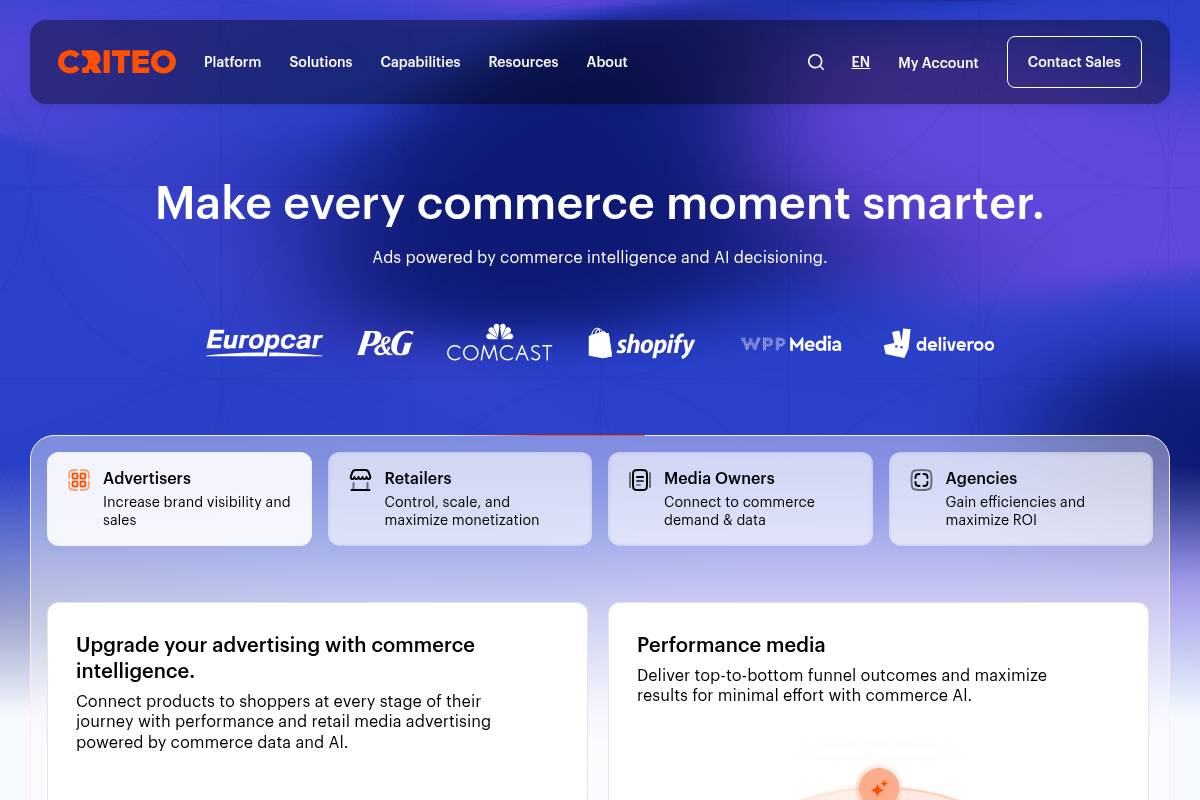
Criteo is a commerce media platform connecting brands with consumers through personalized advertising across 200+ retailers and 1,300+ premium publishers.
Key Features
- Commerce Max: Access to 200+ retailers and premium media owners for onsite and offsite retail media campaigns.
- Performance pricing: Flexible CPC or CPM models with platform fee as percentage of media spend, no setup fees.
- Closed-loop measurement: Standardized reporting tracking campaigns from ad exposure through purchase across retailers.
- Commerce Growth self-serve: AI-powered customer acquisition tools under Criteo GO for automated campaigns.
Best For
Luxury and large D2C brands seeking extensive retail media distribution across multiple retailer networks. Complements core ad management platforms like Adyogi rather than replacing them.
Pros and Cons
- Pro: Unmatched retail media network reach across 200+ retailers and 1,300+ publishers.
- Pro: No setup fees with flexible CPC/CPM performance-based pricing.
- Con: No published standard pricing; costs vary significantly by campaign type.
- Con: Media and retargeting layer primarily, not comprehensive catalog or creative automation.
Rating: 8.3/10
Full Comparison: Lyxel and Flamingo Alternatives for D2C and Luxury Ecommerce
| Tool | Omnichannel Coverage | Catalog Automation | Dedicated Support | Transparent Pricing | Rating |
|---|---|---|---|---|---|
| Adyogi | ✓ | ✓ | ✓ | ✓ | 9.3/10 |
| Madgicx | ✗ (Meta-only) | ✓ | ✗ | ✓ | 8.5/10 |
| Smartly.io | ✓ | ✓ | ✓ | ✗ | 8.7/10 |
| Skai | ✓ | ✗ | ✓ | ✓ | 8.4/10 |
| Triple Whale | ✗ (Shopify-centric) | ✗ | ✗ | ✓ | 8.2/10 |
| Northbeam | ✗ (attribution-only) | ✗ | ✗ | ✓ | 8.0/10 |
| Hunch | ✓ | ✓ | ✓ | ✗ | 8.1/10 |
| AdCreative.ai | ✗ (creative-only) | ✗ | ✗ | ✓ | 7.6/10 |
| Feedonomics | ✓ | ✓ | ✓ | ✗ | 8.0/10 |
| Criteo | ✓ | ✗ | ✓ | ✗ | 8.3/10 |
How to Choose the Right Platform
By Team Size
Small teams without dedicated media buyers should prioritize Adyogi or Triple Whale. Larger marketing teams managing multiple channels will get more value from Smartly.io or Skai's enterprise tools.
By Budget
Brands spending under $5,000/month should look at Adyogi's entry tier, Triple Whale's free plan, or AdCreative.ai. Brands spending $50,000+ monthly across channels are better positioned for Northbeam, Smartly.io, or Skai's enterprise pricing.
By Use Case
For catalog-level automation, Adyogi and Feedonomics are purpose-built. For attribution, Northbeam or Triple Whale fit better. For high-volume dynamic creative, Hunch or Smartly.io lead. For retail media distribution, Criteo and Skai offer deepest retailer network access. For additional buying guidance, see What are the best eCommerce business models in 2026?.
What Is an Ecommerce Ad Management Platform?
An ecommerce ad management platform automates bidding, creative delivery, budget allocation, and reporting across channels like Meta, Google, and Amazon, using a brand's product catalog as the organizing structure. These platforms replace manual, spreadsheet-driven media buying with rules-based or AI-driven automation. For a more detailed primer, see Stories of success, struggles & observations - MUSE AI.
| Metric | What It Measures | Why It Matters |
|---|---|---|
| ROAS (Return on Ad Spend) | Revenue generated per dollar of ad spend | Core profitability indicator for scaling decisions |
| ACOS (Advertising Cost of Sale) | Ad spend as percentage of marketplace sales | Critical for Amazon, Flipkart, and Myntra sellers |
| CAC (Customer Acquisition Cost) | Total cost to acquire one paying customer | Determines long-term unit economics |
| MER (Marketing Efficiency Ratio) | Total revenue divided by total marketing spend | Blended view across all channels |
Conclusion
Adyogi stands out as the top pick for D2C and luxury ecommerce brands wanting catalog-level automation with dedicated human expertise across Facebook, Google, and marketplace channels. For Meta-specific needs, Madgicx is strong. For enterprise-scale creative orchestration, Smartly.io and Skai offer deepest capabilities. For attribution-first teams, Triple Whale or Northbeam fill that gap. Choose based on spend level, channel mix, and whether you need managed service or self-serve tool.
Frequently Asked Questions
What is the best Lyxel and Flamingo alternative for D2C ecommerce brands in India?
Adyogi is the best alternative, combining catalog-level ad automation with dedicated account managers across Meta, Google, Amazon, Flipkart, and Myntra.
How much does Adyogi cost compared to other platforms?
Adyogi's entry tier is billed monthly for ad spend up to $2,500, with managed plans requiring minimum $6,000 per channel, offering more transparency than Smartly.io or Skai.
Which platform is best for luxury ecommerce brands?
Adyogi for day-to-day automation, supplemented by Criteo for retail media distribution and Feedonomics for complex catalog management.
Do these tools work for Amazon, Flipkart, and other marketplaces?
Yes. Adyogi, Skai, and Criteo all offer dedicated marketplace support, with Adyogi covering Amazon, Flipkart, and Myntra from a single dashboard.
What is the minimum ad spend needed?
Most platforms become cost-effective above $3,000-$5,000 monthly; Northbeam and Smartly.io recommend $50,000+ monthly, while Adyogi and Triple Whale offer accessible entry points at $2,500+.
Is Madgicx or Adyogi better for omnichannel brands?
Adyogi is better for truly omnichannel brands, managing Meta, Google, and marketplaces from one dashboard, while Madgicx focuses primarily on Meta.
Can I use multiple tools together?
Yes, many brands combine Adyogi with Triple Whale or Northbeam for attribution, and Feedonomics for feed management.
How do these compare to traditional agencies like Lyxel and Flamingo?
Platform-based alternatives offer more transparent pricing and faster SKU-level automation than traditional media planning agencies, while still providing dedicated account management.
Methodology: Rankings based on publicly available pricing, verified G2 and Capterra reviews, and vendor-published features as of October 2026. Confirm current rates directly with vendors before purchasing.



-1.png)