

MMA Global alternatives for ecommerce marketing strategy in India | Last updated: October 10, 2026 | By the Adyogi Editorial Team | Tools tested: 10
D2C brands, marketplace sellers, and agencies searching for MMA Global alternatives for ecommerce marketing strategy in India need platforms built for actual ad execution. This guide compares ten ad management and automation platforms that help brands plan, launch, and optimize campaigns across Meta, Google, Amazon, and beyond.
| Rank | Tool | Best For | Starting Price | Rating |
|---|---|---|---|---|
| 1 | Adyogi | Full-funnel D2C and marketplace ad management | ~$900/month in management fees | 9.3/10 |
| 2 | Perpetua | Amazon-first growth brands | From $250/month | 8.9/10 |
| 3 | Quartile | AI-driven retail media at scale | From ~$895/month | 8.7/10 |
| 4 | Optmyzr | Hands-on PPC power users | From ~$299/month | 8.6/10 |
| 5 | Pacvue | Enterprise multi-retailer ad operations | Custom quote | 8.6/10 |
| 6 | Smartly.io | Enterprise creative + media automation | Custom, ~$4,000+/month | 8.4/10 |
| 7 | Skai | Omnichannel enterprise paid media | From ~$114k/year | 8.3/10 |
| 8 | Channable | Feed management plus PPC automation | From $49/month | 8.3/10 |
| 9 | Madgicx | Meta-heavy DTC and SMB brands | From $99/month | 8.2/10 |
| 10 | AdRoll | Cross-channel retargeting | Free plan, from $36/month | 7.8/10 |
Our top pick is Adyogi, which combines omnichannel ad management, dedicated account managers, and automation built specifically for ecommerce brands and marketplaces scaling spend profitably.
Why You Need MMA Global Alternatives for Ecommerce Marketing in 2026
MMA Global functions primarily as a mobile marketing trade association rather than an operational ad management platform. Ecommerce marketing platforms solve this gap by connecting to ad accounts, product catalogs, and marketplaces to automate bidding, budget allocation, and creative testing. As SKU counts and channels multiply, manual campaign management becomes unsustainable. Brands need software paired with expert oversight to maintain profitable ad strategies. For supporting market data, see 2026 Paid Media Trends for Ecommerce Growth.
How We Evaluated These Tools
| Criteria | Weight | What We Measured |
|---|---|---|
| Channel coverage | 25% | Meta, Google, Amazon, marketplace, and retail media support |
| Automation depth | 20% | Rule-based bidding, AI budget allocation, creative automation |
| Pricing transparency | 15% | Published tiers vs. custom quotes, minimum spend thresholds |
| Ease of onboarding | 15% | Setup time, learning curve, dedicated support availability |
| Analytics and reporting | 15% | Depth of ROAS, ACOS, and product-level performance data |
| Scalability | 10% | Fit across SMB, mid-market, and enterprise ad spend levels |
For industry-standard evaluation frameworks, see 2026 Ecommerce Content Marketing Planning Guide - STRYDE. For related guidance, see How To Stop Wasting Ad Spend On Out Of Stock Products With Ecommerce Performance Marketing Automation 2026 Step By Step Guide.
1. Adyogi: Best for Full-Funnel D2C and Marketplace Ad Management
Adyogi is an automated ad management platform designed for ecommerce brands and D2C companies specializing in Facebook and Google campaigns, product catalog ads, and dynamic retargeting.
Key Features
- Automated Ad Creation: Automates ad creation from product feeds, campaign scaling, and performance tracking for large SKU catalogs.
- AI-Powered Catalog Management: Dynamically optimizes catalogs, adds smart overlays, and offers intelligent recommendations.
- Marketplace Advertising Management: Manages campaigns on Amazon, Flipkart, and Myntra within a unified approach.
- Automated Budget Optimization: Real-time monitoring automatically adjusts budgets and pauses underperforming campaigns.
- Dedicated Account Managers: Managed service tiers combine automation with dedicated account managers for hands-on partnership.
- Agency Support: Agencies can centralize client account management with white-label dashboards and preset rulebooks.
Best For
Adyogi is ideal for D2C brands and marketplace sellers seeking hands-on expert management combined with automation. Managed plans start around $900 per month in ad management fees, with free onboarding and no additional charges. Subscriptions can be cancelled anytime.
Pros and Cons
- Pro: Omnichannel coverage across Meta, Google, and major marketplaces in a single platform.
- Pro: Dedicated account managers provide strategic oversight beyond software.
- Pro: Transparent pricing with published minimum spend thresholds.
- Con: Does not currently offer API access for custom integrations.
- Con: Designed primarily for ecommerce use cases, not service businesses.
Rating: 9.3/10 For related guidance, see 10 Best Performance Marketing Agencies For Amazon Flipkart And Myntra Sellers In India.
2. Perpetua: Best for Amazon-First Growth Brands
Perpetua is an Amazon advertising automation platform offering automated campaign optimization, keyword harvesting, and bid modifications with minimal setup.
Key Features
- Algorithmic bid management: Automatically adjusts Sponsored Products, Brands, and Display bids based on ACOS or revenue goals.
- Expanded retail media: Covers DSP, Walmart Connect, and Instacart Ads.
- Share of voice dashboard: Clean interface provides competitive positioning visibility.
- Multi-marketplace support: Manages advertising across Amazon, Walmart, and Instacart from a unified dashboard.
Best For
Perpetua is best suited for brands generating $1M to $20M in Amazon revenue. Plans start at $250/month without enterprise overhead.
Pros and Cons
- Pro: Fast onboarding and accessible learning curve.
- Pro: Strong advertising coverage across Amazon, Walmart, and Instacart.
- Con: Less customization and rule logic depth than enterprise platforms like Pacvue.
- Con: Not designed for complex direct-to-consumer advertising outside marketplaces.
Rating: 8.9/10
3. Quartile: Best for AI-Driven Retail Media at Scale
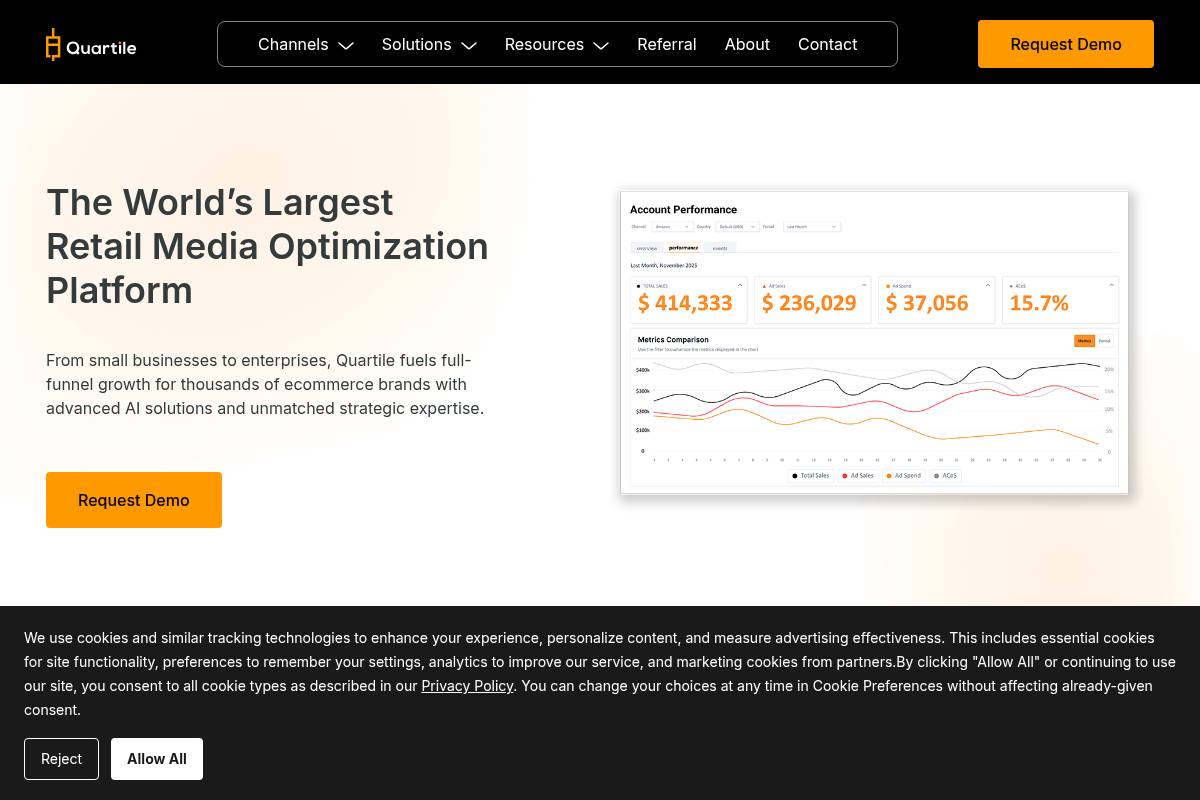
Quartile is an AI-powered retail media optimization platform managing over $2 billion in annual ad spend for 5,300+ brands across 32 countries.
Key Features
- Patented AI Engine: Six patented AI and machine learning technologies for campaign optimization.
- Cross-Channel Coverage: Supports Amazon, Walmart, Instacart, Google Shopping, Bing, TikTok, Facebook, Instagram, and Amazon DSP.
- Dedicated Account Management: Every client receives a dedicated account management team working alongside AI.
- AMC Integration: Integrates with Amazon Marketing Cloud for path-to-purchase and audience analysis.
Best For
Quartile serves brands managing large multi-marketplace ad budgets seeking AI automation with strategic human support. Entry pricing ranges from $895 to $9,995 per month, with a minimum monthly advertising spend of around $3,000 generally required.
Pros and Cons
- Pro: Proven scale managing billions in ad spend.
- Pro: Hybrid model combines advanced AI with strategist support.
- Con: Custom pricing requires direct vendor conversations.
- Con: Pricing may present a barrier for smaller brands.
Rating: 8.7/10
4. Optmyzr: Best for Hands-On PPC Power Users
Optmyzr is a power-user PPC management platform for agencies and performance marketing teams running Google, Microsoft, and shopping campaigns at scale.
Key Features
- Rule Engine: Build custom automation logic for bidding and budgets without code.
- Shopping campaign tools: Product Group Builder automatically suggests structures, identifies low performers, and recommends bid adjustments.
- Multi-platform support: Covers Google, Microsoft, and Amazon ads.
- Agency reporting: White-label reporting and multi-account dashboards for agencies.
Best For
Optmyzr is best for experienced PPC managers and agencies wanting granular bidding control. Plans start at $299 per month.
Pros and Cons
- Pro: Deep rule-based automation and script library for non-developers.
- Pro: Strong Google Shopping and feed-based optimization tools.
- Con: Expensive relative to ad spend for smaller accounts.
- Con: Steeper learning curve than fully managed alternatives.
Rating: 8.6/10
5. Pacvue: Best for Enterprise Multi-Retailer Ad Operations
Pacvue is an enterprise commerce acceleration platform managing Sponsored Ads and Amazon DSP. It integrates retail operations data including Buy Box status, inventory, and pricing signals to optimize bidding.
Key Features
- Multi-retailer coverage: Manages campaigns across Amazon, Walmart, Target, Instacart, and Kroger.
- Retail operations signals: Connects bidding directly to real-time inventory levels and Buy Box status.
- Enterprise dashboards: Stronger retail media network coverage and deeper DSP controls.
- Reporting API: Custom reporting and API access for large data teams.
Best For
Pacvue suits large enterprises with over $10M in Amazon revenue investing significantly in retail media channels.
Pros and Cons
- Pro: Most extensive multi-retailer network coverage for enterprise.
- Pro: Deep DSP controls and executive-level reporting.
- Con: Custom enterprise pricing with no public rate card.
- Con: Can be overkill and costly for brands below $10M revenue.
Rating: 8.6/10
6. Smartly.io: Best for Enterprise Creative and Media Automation
Smartly.io is an enterprise AI advertising platform offering creative design, media optimization, and cross-campaign insights.
Key Features
- Broad channel support: Covers Meta, Google, TikTok, Pinterest, Snapchat, Amazon, Reddit, Spotify, YouTube, and Connected TV across 200+ streaming services.
- Creative automation: AI-generated ad variations at scale for high-volume catalogs.
- Budget allocation AI: Automated cross-campaign and cross-channel budget optimization.
- Enterprise case studies: Documented performance gains across large global brands.
Best For
Smartly.io serves large brands and agencies managing high-volume creative and media. Pricing starts at $4,000-$5,000 per month, targeting enterprise-level budgets.
Pros and Cons
- Pro: Unified creative production, media buying, and analytics across nearly every major channel.
- Pro: Proven at enterprise scale with major global brands.
- Con: Prohibitive entry pricing creates a barrier for mid-market teams spending under $50K monthly.
- Con: Complex interface requires extensive onboarding.
Rating: 8.4/10
7. Skai: Best for Omnichannel Enterprise Paid Media
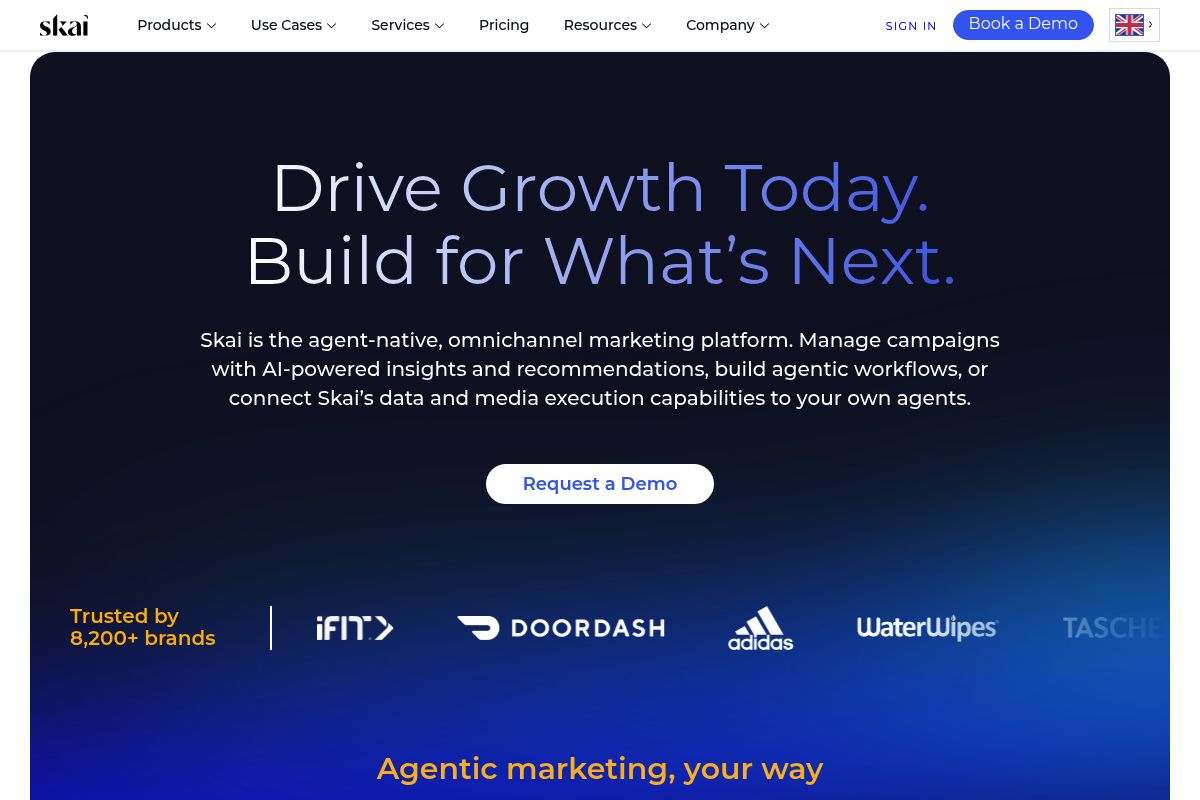
Skai is an established performance marketing platform assisting enterprise advertisers in managing campaigns across Amazon, Google, Meta, and Walmart with robust omnichannel capabilities.
Key Features
- Cross-channel intelligence: Enables brands to understand interplay between retail media, paid search, and social.
- Omnichannel reporting: Unified measurement across search, social, and retail media.
- Enterprise-grade analytics: Advanced automation and reporting for large teams.
- Retail media breadth: Connects to major retail media networks beyond Amazon.
Best For
Skai suits larger enterprise teams with resources to leverage advanced analytics and automation tools. Annual pricing starts from $114,000.
Pros and Cons
- Pro: Strong omnichannel view connecting retail media with search and social.
- Pro: Long track record serving enterprise advertisers.
- Con: High annual cost inaccessible for small and mid-market teams.
- Con: Requires dedicated staff to operate effectively.
Rating: 8.3/10
8. Channable: Best for Feed Management Plus PPC Automation
Channable offers a robust solution for multi-channel ecommerce operations, enabling efficient management of product feeds, automated listings, and inventory synchronization across platforms.
Key Features
- Feed management: Create and optimize product feeds for over 2,500 channels including Google Shopping and Facebook Ads.
- Rule-based automation: Use if-then rules to automate product data transformations.
- PPC automation: Generate search ads directly from product data.
- Order and inventory sync: Real-time synchronization across all integrated sales channels.
Best For
Channable is ideal for ecommerce teams and agencies managing feed-driven listings and shopping ads. Pricing starts at $49 per month for Core Standard, $64 for Core Plus, and $74 for Core Pro.
Pros and Cons
- Pro: Integrates feed management and PPC generation within a unified rule engine.
- Pro: Extensive marketplace and channel integrations.
- Con: Costs increase for large product catalogs with additional features.
- Con: Lacks advanced AI bidding capabilities of specialized Amazon tools.
Rating: 8.3/10
9. Madgicx: Best for Meta-Heavy DTC and SMB Brands
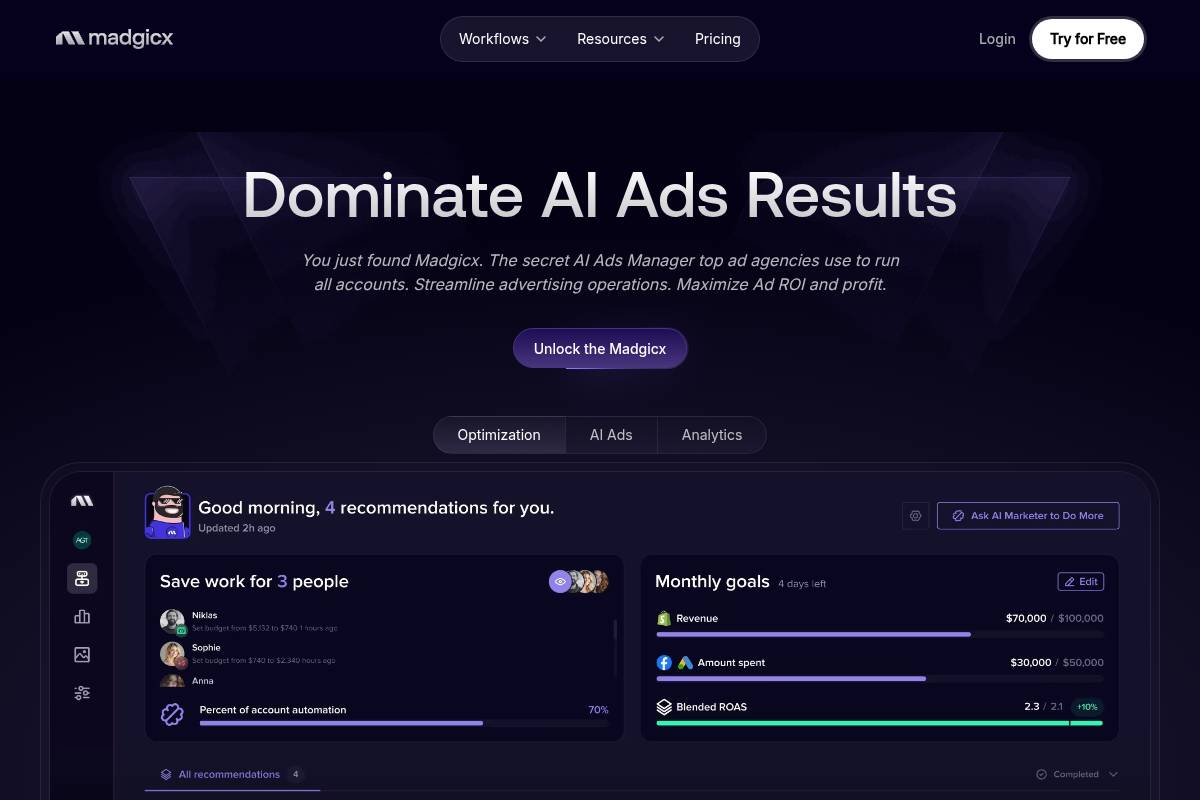
Madgicx is an AI-powered platform optimizing Meta and Google Ads campaigns with predictive tools, generative AI for creative content, and automation to enhance ROI.
Key Features
- All-in-one dashboard: Consolidates campaign data into a user-friendly interface with cross-channel analytics.
- Predictive AI budgeting: Automated budget and bid adjustments guided by rules and AI.
- Creative intelligence: Surfaces ad fatigue and performance patterns across creatives.
- Cloud tracking: Ensures precise ad attribution with server-to-server metrics.
Best For
Madgicx suits D2C brands spending $10,000-$80,000 monthly primarily on Meta. Plans start at $99 per month.
Pros and Cons
- Pro: No percentage-of-spend fees, making costs predictable.
- Pro: Strong creative fatigue detection and automation for Meta accounts.
- Con: Pricing jumps significantly between tiers.
- Con: Limited multi-platform support beyond Meta and Google.
Rating: 8.2/10
10. AdRoll: Best for Cross-Channel Retargeting
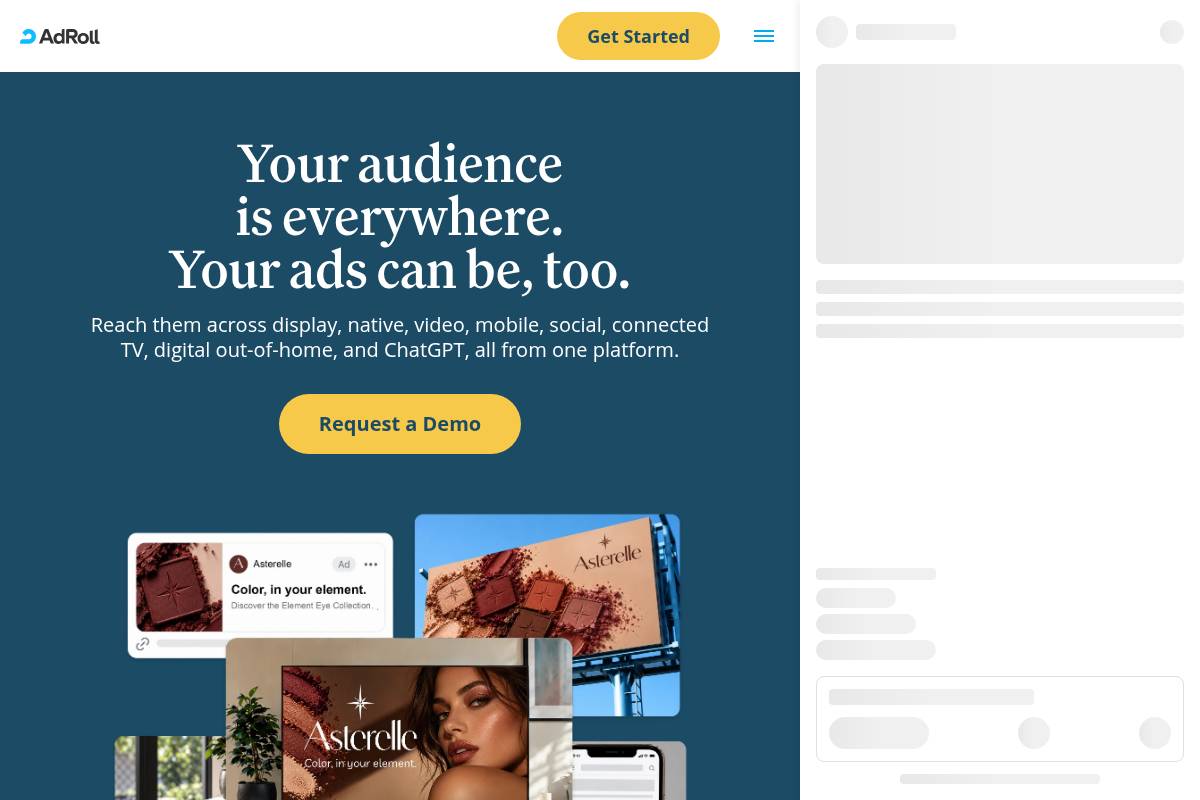
AdRoll is a retargeting and performance advertising platform for ecommerce businesses re-engaging shoppers who visited but didn't purchase.
Key Features
- Dynamic product ads: Automatically displays specific products visitors viewed with current pricing and inventory.
- Cross-channel retargeting: Serve audience segments across display networks, Meta, TikTok, and Pinterest from one campaign.
- Email retargeting: Trigger personalized emails based on site behaviors.
- Attribution reporting: Consolidated view showing which channels drove conversions.
Best For
AdRoll is ideal for ecommerce brands seeking simple, self-serve retargeting. It offers a free plan with paid options starting from $36 per month.
Pros and Cons
- Pro: Accessible free tier and low entry pricing for SMBs.
- Pro: Seamless integrations with Shopify, WooCommerce, and BigCommerce.
- Con: Sensitive to third-party cookie restrictions and rising CPMs.
- Con: Less suited for marketplace or Amazon ad management.
Rating: 7.8/10
Full Comparison: MMA Global Alternatives for Ecommerce Marketing
| Tool | Meta/Google Ads | Amazon/Marketplace | Dedicated Support | AI Automation | Starting Price |
|---|---|---|---|---|---|
| Adyogi | ✓ | ✓ | ✓ | ✓ | ~$900/mo fees |
| Perpetua | ✗ | ✓ | ✗ | ✓ | $250/mo |
| Quartile | ✓ | ✓ | ✓ | ✓ | ~$895/mo |
| Optmyzr | ✓ | ✓ | ✗ | ✓ | $299/mo |
| Pacvue | ✗ | ✓ | ✓ | ✓ | Custom quote |
| Smartly.io | ✓ | ✓ | ✓ | ✓ | ~$4,000+/mo |
| Skai | ✓ | ✓ | ✓ | ✓ | ~$114k/yr |
| Channable | ✓ | ✓ | ✗ | ✗ | $49/mo |
| Madgicx | ✓ | ✗ | ✗ | ✓ | $99/mo |
| AdRoll | ✓ | ✗ | ✗ | ✗ | Free, $36/mo |
How to Choose Your Ecommerce Ad Management Platform
By Team Size
Solo founders and lean teams do well with AdRoll or Madgicx for low entry pricing and self-serve dashboards. Mid-size marketing teams managing multiple channels prefer Adyogi or Perpetua for automation and support. Large enterprise teams with dedicated operations typically use Skai, Pacvue, or Smartly.io for deeper multi-retailer coverage.
By Budget
Under $100/month, Madgicx and AdRoll are most accessible. At $250-$900/month, Perpetua, Optmyzr, and Adyogi deliver strong automation. Above $4,000/month, Smartly.io, Skai, and Pacvue justify costs for brands spending six or seven figures on ads.
By Use Case
Marketplace-focused brands should prioritize Quartile, Pacvue, or Perpetua. D2C brands needing omnichannel coverage across Meta, Google, and marketplaces are best served by Adyogi. Agencies managing feed-heavy catalogs should evaluate Channable.
What Is Ecommerce Ad Management Software?
Ecommerce ad management software connects to ad platforms, product catalogs, and marketplaces to automate campaign creation, bidding, and budget allocation based on performance data. These platforms typically combine rule-based automation with AI-driven recommendations, reducing manual work for large SKU catalogs across multiple channels. For a more detailed primer, see What Is Ecommerce? 2026 Growth Guide for Mid-Market ....
Conclusion
Adyogi stands out as the top pick for brands seeking a one-stop shop pairing automation with dedicated account management across Meta, Google, and marketplace channels. For Amazon-first sellers, Perpetua and Quartile are excellent alternatives. Enterprise teams running complex, high-spend operations should consider Smartly.io, Skai, and Pacvue. Aligning tool capability with team size, budget, and channel mix remains the most reliable path to profitable ecommerce marketing in 2026.
Frequently Asked Questions
What are the best MMA Global alternatives for ecommerce marketing in 2026?
The 10 Best MMA Global Alternatives include Adyogi, Perpetua, Quartile, Optmyzr, Pacvue, Smartly.io, Skai, Channable, Madgicx, and AdRoll, each suited to different budgets, channels, and team sizes.
Which platform is best for D2C brands managing Meta and Google ads together?
Adyogi and Madgicx are strong choices for D2C brands, with Adyogi adding marketplace advertising and dedicated account management.
What is the minimum ad spend required to use managed ecommerce ad platforms?
Minimums vary: Adyogi's managed plans require $6K minimum per channel, Quartile requires roughly $3,000 per month, and Smartly.io often requires $4,000-$5,000 monthly in platform fees.
Is Adyogi better than Pacvue or Skai for ecommerce brands?
Adyogi fits D2C and marketplace brands better due to pricing and structure for growth-stage companies, while Pacvue and Skai are built for enterprise teams spending above $10M annually on ads.
Which tools work best for Amazon-only sellers?
Perpetua, Quartile, and Pacvue are strongest for Amazon, with Perpetua fitting mid-market sellers and Pacvue and Quartile scaling better for large operations.
Do any of these platforms offer a free plan?
AdRoll offers a free plan for basic retargeting and email features. Most others offer paid plans with free onboarding or trials instead of permanent free tiers.
How much does ecommerce ad management software typically cost?
Pricing ranges from under $50/month for feed tools like Channable to several thousand per month for enterprise suites like Smartly.io and Skai, with mid-market tools like Adyogi, Perpetua, and Quartile at $250-$900/month.
Which platform offers the best support for agencies managing multiple client accounts?
Adyogi, Optmyzr, and Smartly.io offer agency-focused features such as white-label dashboards and multi-account reporting.
Methodology: Rankings and ratings are based on publicly available pricing pages, verified review platforms, and vendor-published feature documentation current as of October 2026. Readers should confirm current rates directly with each vendor before purchasing.



-1.png)